
















I’ve been building brains for synthetic characters since before we called them “agentic.” Here’s the short version, oldest first.
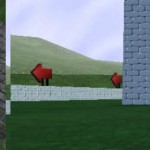
- 1995-1999 – Queen’s University. Fifty of us built a student game called the Legend of the Greasepole, and I wrote the autonomous AI for its characters. A team of people building something together, plus some early agent-wrangling, which is funny, because it’s pretty much what I do now. That game is what sent me to MIT.
- 1999-2001 – MIT Media Lab, Synthetic Characters group. Grad school under Bruce Blumberg. My thesis was on temporal representations: giving a virtual creature a sense of time, so that remembering the past and predicting the future is part of what makes it feel present, like somebody’s home in there.
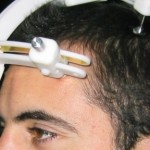
- 2002-2004 – MIT Media Lab Europe, Dublin. Built biometric interfaces (EEG, ECG and other) in the MindGames group. Reading a person’s state and responding to it.
- 2004-2007 – Microsoft, Dublin. Technical evangelist (remember when that was a thing?!), at the intersection of technology communication and solving real business problems for enterprise clients.
- 2007-2009 – Carrington Technologies, Toronto. My own small consultancy: financial institutions, legal practices, and Microsoft’s National Productivity Centre in Ireland.
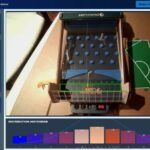
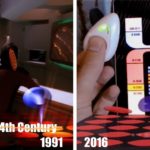
- 2009-2017 – Infusion (now part of Avanade). Emerging tech for financial services and beyond. Also where the HoloLens shenanigans happened; a Star Trek biometrics game that got covered in Popular Mechanics and presented at the California Academy of Sciences.
- 2017-present – EPAM. Client Partner and Senior Director of Account Management, Head of Public Sector Accounts in Canada. The day job is building teams of people and AI agents and then actually building with them.
- 2026 – the field came back around. I’m building brains for synthetic characters again, for real this time. Navy (nee Ziggy), our family’s AI, runs a five-layer memory architecture with a temporal layer. Tom learns my photo-editing taste from demonstrated behaviour, not instructions. I write the rest up as Side Quests.
The same question runs through all of it, from a virtual terrier in 1999 to the agents I build now: what makes a synthetic character feel present? What does it remember, what does it expect, and what should it do next? The tools are unrecognizably better, but the questions are uncannily aligned to the ones Bruce challenged us to ask.
There’s one more question stacked on top now, which I think is the most pressing, and certainly the one I care the most about: when the agent can “do the doing,” what are the people for? Their judgment relocates – into specifying the work, validating it, teaching it, and being across the table when it matters.