Toronto is snowy again. Awesome.

If it’s Autumn, it must be time for TechDays again here in Canada. This year I was Microsoft Canada’s Content Lead for the “Real-World Patterns for Cloud Computing” session.
The Toronto flavour of the event has been taking place yesterday and today.
The Cloud Computing presentation focused on scenarios involving where we use the cloud for compute, storage, and scaling (of both compute power and storage). It looked at a real-world case study using Windows Azure Worker Roles, and multiple Azure Storage account (leveraging Blobs and Queues – Azure Table Storage and SQL Azure are other stories for other presentations).
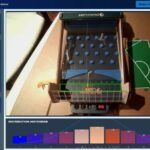
Here’s the basic demo path (as pictured above):
1. Efficiently upload content to the cloud
2. After upload, add message(s) to Azure Queue indicating to a Worker Role there’s content to process
3. Use a Worker Role to read messages from the Queue and process the uploaded content
4. Show how to scale the whole thing – both storage (if it exceeds 100TB, the limit of an Azure Storage Account), and compute (if there is too much content to process by a single Worker Role).
The focus of the talk was on incorporating good practices (and avoiding gotchas) throughout this process. We started with some simple code that uploaded content to the cloud and processed it using a worker role, and then modified the solution to incorporate a number of improvements. Then we slammed the whole thing with a heavy load and used the Windows Azure Dynamic Scaling Sample to monitor the growth of the queue and scale up and down accordingly.
(This last part addresses what is certainly one of the most frequently asked questions I get about Azure – does it scale its computing automatically, and if not, how do I do so? The Dynamic Scaling Sample provides one very configurable and suitable solution for automated scaling of Azure computing.)
If you were at TechDays and are interested in the sample code, please contact me and I’ll send a link. You may also be interested in Microsoft Evangelist Wade Wegner’s presentation from TechEd2010, which he delivered with Jerry Schulist from the Tribune Company. I’m indebted to Wade and Jerry for their excellent presentation and their pioneering work with Azure.
If you’re interested in Azure and cloud computing, you almost certainly will be interested in following what’s going on this week in Redmond at Microsoft PDC 2010. The entire conference will be streamed online – follow that link for a slick schedule and some nice .ics links so you can add talks of interest to your calendar.
[Update, 29 Oct 2010: There were indeed quite a few announcements related to Azure at PDC2010 - check them out!]
Thanks to everyone who came out – I really enjoyed the day and that was probably the best post-presentation Q&A session I’ve ever had, even if Joey had to “Kanye” me off stage again when question time ran out! My compliments to the MS Canada team – they have the choreography of these large-scale tech events down to an art.
I’m looking forward to presenting this talk again in Ottawa on November 9th for the TechDays Ottawa event.
I must admit, at first I had my doubts about whether or not I’d be cycling Kalgoorlie.
I visited the Museum of Western Australia and found this remarkable precursor to the modern Cervelo, built with wheels from old boxes, “tyres” from old meat tins and forks fashioned from mulga wood (whatever that is).
Consider this detail of the chainular region, which back in the day would have been wrapped with – would you believe – a “chain” made of bullock hide (whatever that is). One can only wonder how the fate of Andy Schleck in this year’s Tour de France would have been altered if he’d opted for this legacy technology.
The exhibit noted that this woody relic had been “pushed” from Southern Cross to Mount Barker back in the gold rush days. Being a Canadian and generally unaware of distances here in the outback, I had to have a peek at the map to discover that this represents a distance in excess of 2,150km, which, I am sure you’re aware, is about the distance from Vancouver to Winnipeg.
So what excuse did I have, visiting Kalgoorlie and not getting onto a bike myself?!
I proceeded into town and found the local cycling shop, Hannan’s Cycles. If you need cycling gear in Kalgoorlie, Hannan’s Cycles is the shop you’re looking for. A gentleman named Brian there very kindly loaned me a road bike they had in the back. I will be forever in his debt, for not only did this act of generosity give me access to a bike made out of modern materials, but he’d also tuned it up ready to go for a cycle out of Kalgoorlie!
Epic.
I started by visiting the vast Super Pit, this massive gold mine just outside of town. In fact, I was there just in time to see the day’s blast! This pit is insanely massive, and only getting bigger: the viewing platform I was standing on is due to be demolished shortly as the open pit expands towards town.
So off I went down the Goldfields Highway to see what I can see. In Toronto I sometimes lament not having a long enough stretch of road to (safely) attempt a series of intervals. Here, this is not an issue. The road went on into the bush for as far as the eye could see.
And not only that, but look at the shoulders. They were great, and traffic was forgiving.
However, I will never complain about Canadian trucks again. I learned a new term in Kalgoorlie: “Road Train.”
These Road Train mothers of all truckers legally stretch up to 63.5m in length and just when you think they’ve finished passing you, there’s an improbable amount still coming to whoosh by.
The Goldfields Highway follows the route of the pipeline that provides water to Kalgoorlie from Perth, which itself is a storied engineering feat. It’s hard to imagine life in the goldfields before it was bringing water out here. (I mean, how could you lug the weight of water over that distance without having to drink all the water you were carrying?!)
Feeling in need of a little extra life, I considered a short stop at 2-Up. Actually, I found out afterwards that this is not in fact a Super Mario Brothers reference in the middle of the bush, but instead a now-defunct casino whose name references a popular Australian gambling game played with two old pennies. (I was given a set by some thoughtful Australians I met in town.)
And what trip to a mining town would be complete without a visit to the explosives reserve? Actually, I kid — they wouldn’t let me anywhere near a room this full of explosives! This is an exhibit at the Mining Hall of Fame showing what the explosives would have looked like during the same era that the above mulga wood bicycle was bleeding edge.
I suppose that, in a pinch, the very resourceful cyclist of yesteryear could have whittled their mode of transportation into a fuse, ignited the explosives, and found some gold like the hot stuff pictured above, which could then have be used (in conjunction with time travel), towards the purchase of a new Cervelo.
Can you pull off a cunning stunt like that with a carbon fiber frame? I dare say you could not. I rest my epic case.